Brand Image
12/5/2025

The Secret Psychology Behind Your Pet's Shopping App: 4 Strategies Brands Use to Win Your Loyalty

#Pet Psychology#App Loyalty
The Secret Psychology Behind Your Pet's Shopping App: 4 Strategies Brands Use to Win Your Loyalty

Introduction: From Store Aisle to Smart App


Remember the weekly chore of lugging a giant bag of pet food home from the store? For millions, that routine has been replaced by a few taps on a smartphone. The rise of e-commerce has transformed how we shop for our pets, and specialized mobile apps are at the forefront of this revolution. The global pet care market is booming, but this growth isn't just a business trend—it's a reflection of a deep, psychological shift in how we view our animal companions.

Beneath the surface of these convenient apps lies a sophisticated strategy designed to build a powerful, direct relationship with you. This article reveals four of the most surprising and impactful strategies that these apps use to win our loyalty and fundamentally change the way we care for our furry family members.


1. The Multi-Billion Dollar Shift: It's Not Pet "Ownership," It's "Parenting"


The single biggest economic driver of the modern pet care industry is the concept of "pet humanization." This has moved far beyond a simple marketing buzzword; it's a fundamental shift in our collective mindset. We no longer just "own" pets; we are "pet parents."

This shift has created a massive market for premium products, with categories like high-end food, healthcare, and supplements projected to grow at a compound annual growth rate (CAGR) of 12.8%. The most visible evidence of this is the rapid expansion of the fresh and frozen pet food market, where brands like The Farmer's Dog have disrupted the industry with direct-to-consumer subscription models.

This psychological change is critical because "Pet Parents" behave differently than traditional owners. They demand transparency in ingredients, seek personalized solutions, and demonstrate what economists call "price inelasticity"—meaning their demand for a product doesn't change significantly even when the price increases, so long as they perceive it contributes to their pet's health and happiness. This creates the perfect environment for specialized, high-touch mobile apps to thrive.


2. The Great Divide: Why an App User Is Worth Up to 5x More Than a Web User


From a unit economics perspective, the most critical finding in e-commerce is the staggering difference in value between a customer who uses a brand's app and one who only shops on its mobile website. For pet care brands, the app is not just another sales channel; it's the primary engine for building long-term value.

The performance metrics speak for themselves. Compared to a mobile web user, a native app user is dramatically more valuable:

Lifetime Value (LTV): 3-5x higher on the native app.

Conversion Rate: 300% higher (6-8% on the app vs. ~2% on the web).

90-Day Retention: 60% higher on the app.

These numbers are a direct result of user behavior. App users view more than double the number of products per session (14 vs. 6 on the web), leading to more opportunities for discovery and purchase. This data highlights a core strategic insight:

The mobile web, optimized for search and discovery, has proven to be a "leaky bucket" for long-term loyalty.

Downloading an app is a clear signal of high intent. Once installed, the brand’s icon lives on the user's home screen—a constant, low-friction reminder that makes re-ordering almost effortless. The web is for finding a brand; the app is for living with it.


3. The "Cooper" Effect: How Your Pet's Profile Creates an Emotional Lock-In


Have you ever noticed how a pet app immediately asks you to create a detailed profile for your furry friend? This is a deliberate strategy rooted in a behavioral economics principle called the "Endowment Effect"—the idea that we place a higher value on things we've helped create.

By prompting you to enter your pet's name, breed, birthday, allergies, and even upload a photo, these apps leverage this psychological hook to create a powerful emotional connection. The app is no longer just a store; it’s a personalized hub for your pet's well-being.

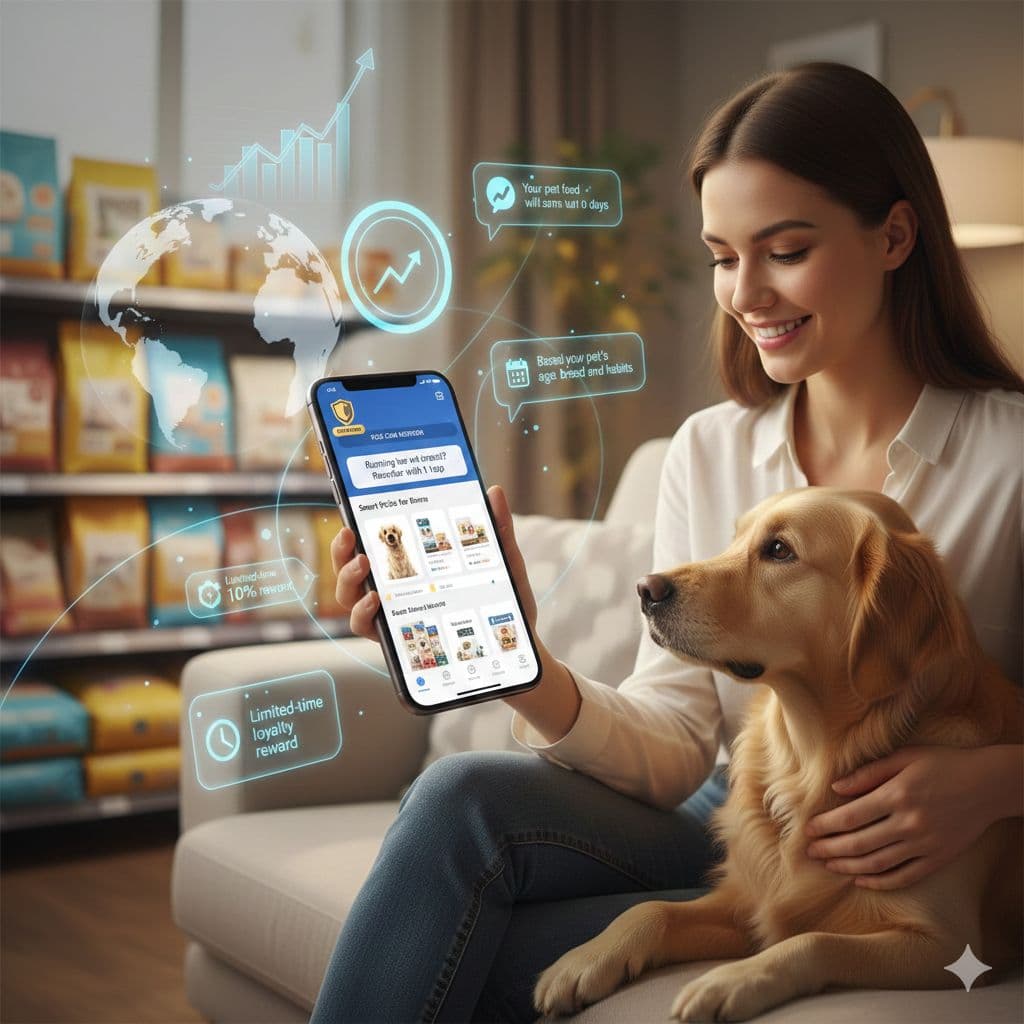
When a user uploads a photo of their Golden Retriever, "Cooper," and inputs his birthday, the app ceases to be a store; it becomes Cooper's app. This emotional investment creates a high barrier to exit. Deleting the app feels like deleting Cooper's data.

This strategy reframes the entire experience. When the app recommends "Senior Dog Joint Chews" for your 9-year-old dog, it feels like personalized, proactive care. This turns the brand's marketing apparatus into a perceived wellness service, building a defensive moat of trust that competitors on a generic marketplace cannot replicate.


4. The End of "Oops, I Ran Out": Solving Churn with Smarter Subscriptions


For subscription-based businesses, customer cancellation—or "churn"—is the biggest threat. Surprisingly, customers often cancel for mundane, "passive" reasons: they have too much product stockpiled, a credit card expired, or a delivery is inconveniently timed.

Modern native apps solve these problems with defensive features like large, one-tap "Skip Shipment" and "Ship Now" buttons, removing the friction that leads to cancellation. But their true genius lies in how they turn defense into offense. The data collected in the "Cooper Effect" isn't just for emotional connection; it's the engine for logistical precision. Using a simple calculation—(Bag Weight) / (Daily Consumption based on Pet Weight) = Days to Empty—the app can predict exactly when you'll run out of food. This powers "Predictive Replenishment," turning a generic reminder into a helpful utility: "Cooper has about 3 days of food left. Tap here to ship his next bag today."

This proactive management is then paired with the single biggest driver of revenue expansion: the "Add-to-Box" Carousel. Just before a scheduled shipment, the app presents a curated list of high-margin items like treats and toys. With a single tap, a user can add them to the upcoming box without paying extra for shipping. This combination of proactive service and frictionless upselling not only prevents churn but dramatically increases each customer's average order value.

Conclusion: Your Phone Isn't Just a Store, It's a Relationship

The battle for the modern pet care market is no longer being fought over price or product alone; it's being fought over who can build the most direct and meaningful relationship with the customer. The strategies embedded in these apps are designed to move beyond simple transactions and foster a sense of partnership in the well-being of our pets. By personalizing the experience, reducing friction, and providing genuine utility, brands are turning their apps into indispensable tools for the modern pet parent.

Ultimately, the strategic difference is best captured by a key insight from retention analysis:

The mobile web is a transactional medium; it is where people buy. The native mobile app is a relational medium; it is where people live.

The next time an app asks you to build a profile for your pet, will you see it as just a form to fill out, or as the first step in a carefully designed relationship?